
Post-Harvest Process
The Andani cacao is produced under an agroecological farming approach, completely free from chemical pesticides and synthetic agro-inputs. Our production philosophy focuses on protecting soil health, biodiversity, and the natural balance of the ecosystem while producing high-quality cacao.
Selective Harvest
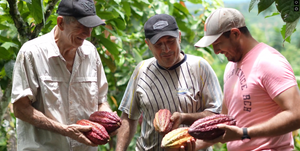
Harvesting is carried out manually with careful selection of fully mature pods only. Immature, overripe, or diseased pods—especially those affected by monilia—are excluded from the harvest.
This strict selection ensures that only healthy and properly developed beans enter the post-harvest process, which is essential for achieving consistent fermentation and flavor development.
After pod opening, the fresh cacao beans are placed in clean collection containers and transported in sealed tanks to the TIKRANA post-harvest facility, where controlled fermentation and drying take place.
Draining Stage
Upon arrival, the wet cacao beans are transferred into dedicated, labeled fermentation crates, specifically reserved for our chemical-free cacao lots.
The crates are placed on wooden pallets, ensuring the beans never come into contact with the ground and maintaining hygienic conditions throughout the process.
The cacao rests in these crates for approximately 48 hours, allowing the natural mucilage draining process to occur. This stage reduces excess pulp and prepares the beans for a more balanced fermentation.
Fermentation
After draining, the beans are transferred to wooden fermentation boxes, exclusively used for cacao produced without chemical inputs.
Fermentation lasts 4 to 5 days and is carefully monitored:
Days 1–2: The beans remain undisturbed, allowing the anaerobic phase to develop naturally as yeasts transform the sugars in the mucilage.
Days 3–5: The cacao mass is turned at specific intervals, introducing oxygen and ensuring a uniform fermentation.
During this stage, temperatures typically reach 45 °C to 48 °C, an ideal range that promotes the development of important aroma precursors while reducing bitterness and astringency.
Drying
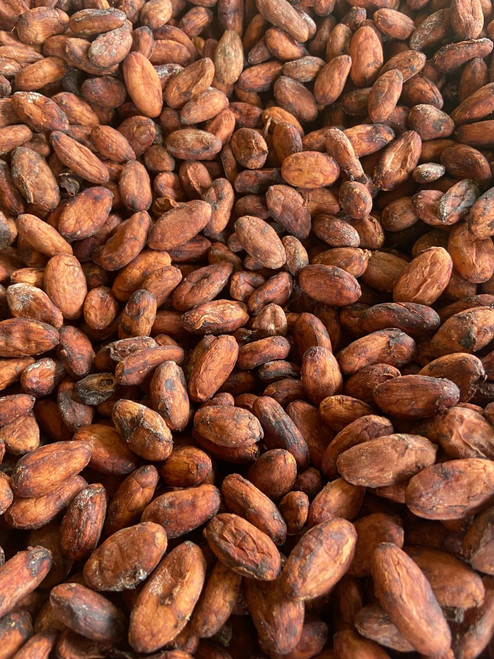
Once fermentation is complete, the cacao beans are transferred to a gas-assisted drying system where drying takes place under controlled moderate temperatures.
The beans are continuously turned throughout the process to ensure uniform moisture reduction and to avoid uneven drying or overheating.
Drying continues until the beans reach a final moisture content of 7 % or lower, the standard required for high-quality export cacao.
Storage
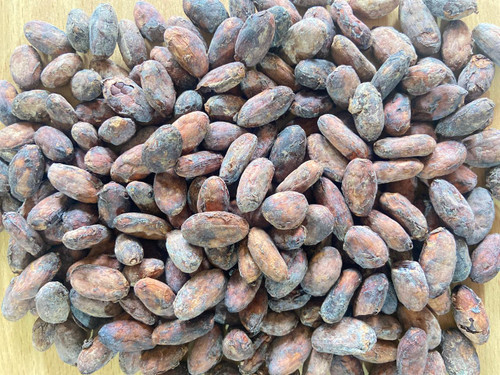
After drying, the beans are carefully inspected and packed in natural jute bags.
The cacao is stored in a designated and clearly labeled storage area, reserved exclusively for chemical-free cacao, ensuring separation from other products and preserving the integrity of the lot.
The storage area maintains proper ventilation, dryness, and cleanliness, allowing the beans to remain stable while awaiting shipment to chocolate makers.
Result
Through this careful post-harvest process—combining selective harvesting, controlled fermentation, gentle drying, and dedicated storage—Andani cacao achieves:
80–90 % fermentation
≤ 7 % moisture
Grade 1 export quality
Full traceability from farm to lot
Our goal is to deliver cacao that allows chocolate makers to express the true potential of Ecuadorian origin cacao in every batch.
The Andani cacao is produced under an agroecological farming approach, completely free from chemical pesticides and synthetic agro-inputs. Our production philosophy focuses on protecting soil health, biodiversity, and the natural balance of the ecosystem while producing high-quality cacao.
Selective Harvest
Harvesting is carried out manually with careful selection of fully mature pods only. Immature, overripe, or diseased pods—especially those affected by monilia—are excluded from the harvest.
This strict selection ensures that only healthy and properly developed beans enter the post-harvest process, which is essential for achieving consistent fermentation and flavor development.
After pod opening, the fresh cacao beans are placed in clean collection containers and transported in sealed tanks to the TIKRANA post-harvest facility, where controlled fermentation and drying take place.
Draining Stage
Upon arrival, the wet cacao beans are transferred into dedicated, labeled fermentation crates, specifically reserved for our chemical-free cacao lots.
The crates are placed on wooden pallets, ensuring the beans never come into contact with the ground and maintaining hygienic conditions throughout the process.
The cacao rests in these crates for approximately 48 hours, allowing the natural mucilage draining process to occur. This stage reduces excess pulp and prepares the beans for a more balanced fermentation.
Fermentation
After draining, the beans are transferred to wooden fermentation boxes, exclusively used for cacao produced without chemical inputs.
Fermentation lasts 4 to 5 days and is carefully monitored:
Days 1–2: The beans remain undisturbed, allowing the anaerobic phase to develop naturally as yeasts transform the sugars in the mucilage.
Days 3–5: The cacao mass is turned at specific intervals, introducing oxygen and ensuring a uniform fermentation.
During this stage, temperatures typically reach 45 °C to 48 °C, an ideal range that promotes the development of important aroma precursors while reducing bitterness and astringency.
Drying
Once fermentation is complete, the cacao beans are transferred to a gas-assisted drying system where drying takes place under controlled moderate temperatures.
The beans are continuously turned throughout the process to ensure uniform moisture reduction and to avoid uneven drying or overheating.
Drying continues until the beans reach a final moisture content of 7 % or lower, the standard required for high-quality export cacao.
Storage
After drying, the beans are carefully inspected and packed in natural jute bags.
The cacao is stored in a designated and clearly labeled storage area, reserved exclusively for chemical-free cacao, ensuring separation from other products and preserving the integrity of the lot.
The storage area maintains proper ventilation, dryness, and cleanliness, allowing the beans to remain stable while awaiting shipment to chocolate makers.
Result
Through this careful post-harvest process—combining selective harvesting, controlled fermentation, gentle drying, and dedicated storage—Andani cacao achieves:
80–90 % fermentation
≤ 7 % moisture
Grade 1 export quality
Full traceability from farm to lot
Our goal is to deliver cacao that allows chocolate makers to express the true potential of Ecuadorian origin cacao in every batch.